
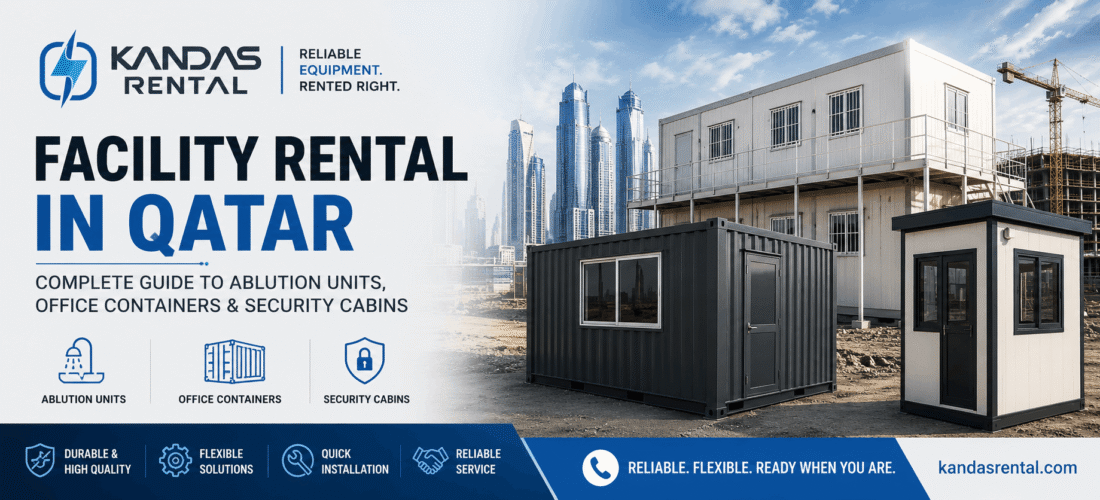
Facility rental in Qatar provides temporary infrastructure such as ablution units, office containers, security cabins, kitchen containers, and other portable facilities for construction, industrial, infrastructure, oil and gas, and event projects. These solutions help businesses establish functional project sites without the time and expense involved in building permanent facilities.
Temporary facilities are particularly useful when project requirements change frequently. They can be delivered, installed, relocated, and removed according to operational needs, making them suitable for both short-term and long-term projects.
What Is Facility Rental and Why Is It Important for Qatar Projects?
Facility rental refers to the provision of temporary or relocatable structures that support the daily operations of a project. Instead of constructing permanent buildings, businesses can rent ready-to-use facilities for as long as they are needed.
For construction and industrial projects, these facilities can provide essential spaces for administration, sanitation, security, food preparation, and workforce support.
Facility rental is important because projects may operate in locations where permanent infrastructure is unavailable, impractical, or too time-consuming to construct. Rental solutions allow companies to establish essential facilities quickly while maintaining flexibility throughout the project lifecycle.
What Types of Temporary Facilities Can You Rent in Qatar?
Different project environments require different types of facilities. The right combination depends on workforce size, project duration, available space, site conditions, and intended use.
Ablution Units for Construction and Industrial Sites
Ablution units provide dedicated washing and sanitation facilities for workers at construction and industrial locations. They are useful where permanent washrooms or washing facilities are unavailable.
These units can be positioned around a project site to provide convenient access for workers. Their portable design also makes them suitable for projects where facilities may need to be relocated as construction progresses.
Before renting an ablution unit, businesses should consider the number of users, available installation space, water supply, drainage, ventilation, and maintenance requirements.
Office Containers for Temporary Site Offices
Office containers provide practical workspaces for project managers, engineers, supervisors, administrative staff, and other site personnel.
Depending on the configuration, these units can include doors, windows, electrical connections, lighting, ventilation, and air conditioning. They allow businesses to establish functional offices without constructing permanent buildings.
Office containers are especially useful during the early stages of construction when project teams need operational workspace before permanent facilities are completed.
Security Cabins for Construction Site Access Control
Security cabins provide protected spaces for security personnel at construction entrances, warehouses, industrial facilities, checkpoints, and controlled access areas.
A strategically positioned cabin allows guards to monitor vehicles, visitors, deliveries, and employee movement while providing protection from outdoor conditions.
Compact security cabins are also useful where space is limited and a dedicated security point is required.
Kitchen and Pantry Containers for Worker Facilities
Large construction and industrial projects may need temporary kitchen and pantry facilities to support workers and site personnel.
Kitchen containers provide designated areas for food preparation and related activities. They can help keep food services separate from active work areas while creating a more organized site environment.
When planning kitchen facilities, consider the expected number of users, electrical requirements, ventilation, water supply, drainage, and cleaning arrangements.
What Are the Benefits of Renting Temporary Site Facilities?
Temporary facility rental can provide practical and financial advantages compared with constructing permanent structures.
Reduce Initial Infrastructure Costs
Permanent construction involves materials, labor, site preparation, and other expenses. Renting temporary facilities reduces the initial investment and allows businesses to allocate resources toward other project requirements.
Set Up Facilities Faster
Portable cabins and containers can generally be prepared and delivered faster than permanent buildings. This allows project teams to establish essential facilities early and begin operations without waiting for lengthy construction work.
Adapt Facilities to Changing Project Needs
Construction sites change as projects move through different phases. Rental facilities provide the flexibility to add, remove, or modify site infrastructure according to changing workforce and operational requirements.
Relocate Facilities When Required
Portable facilities can be moved when access points, work zones, or site layouts change. This is particularly useful for large construction and infrastructure projects.
Scale Facilities as Workforce Requirements Change
A project may begin with a small team and expand as construction progresses. Rental allows businesses to increase facilities when workforce requirements grow without investing in permanent structures.
Facility Rental vs. Building Permanent Facilities: Which Is Better?
The choice between renting temporary facilities and constructing permanent infrastructure depends on the project’s duration, budget, location, and long-term requirements.
| Factor | Facility Rental | Permanent Construction |
| Initial investment | Lower upfront cost | Higher capital investment |
| Setup time | Faster deployment | Longer construction period |
| Project flexibility | Easy to relocate or replace | Difficult to modify or relocate |
| Short-term projects | Highly suitable | Often less practical |
| Long-term use | Suitable with appropriate rental terms | Suitable for permanent requirements |
| Maintenance | Often supported by rental provider | Owner is generally responsible |
| Scalability | Facilities can be added or reduced | Expansion may require additional construction |
| Relocation | Relatively easy | Usually difficult and expensive |
| Capital commitment | Limited | Significant |
| End of project | Facilities can be returned | Building remains as an asset |
For short-term construction, infrastructure, event, or industrial projects, renting can provide greater flexibility and faster deployment. Permanent facilities may be more suitable when a business requires the infrastructure for many years at the same location.
How to Choose the Right Facility for Your Project
Choosing the correct facility requires more than selecting the lowest rental price. Businesses should evaluate practical requirements before making a decision.
Consider the Project Duration
Determine how long the facility will be required. Short-term projects may require different rental arrangements from long-term industrial or infrastructure projects.
Estimate the Number of Users
The number of workers and personnel using the facility affects the size and quantity required. This is particularly important when planning ablution units, offices, kitchens, and welfare facilities.
Check Available Site Space
Measure the proposed installation area and consider vehicle access, ground conditions, clearance, and future relocation requirements.
Identify Utility Requirements
Confirm whether the facility requires electricity, water, drainage, air conditioning, ventilation, or other connections before arranging delivery and installation.
Evaluate Site and Weather Conditions
Project locations can vary significantly. Heat, dust, outdoor exposure, accessibility, and remote working conditions should all be considered when selecting temporary facilities.
Check Maintenance and Support Services
Before renting, clarify responsibilities for maintenance, cleaning, repairs, transportation, installation, and removal. Reliable support can help minimize operational disruptions.
Choosing premium facility rental solutions in Qatar can help businesses establish practical and organized temporary infrastructure while maintaining flexibility throughout the project.
Facility Rental vs. Equipment Rental: What Is the Difference?
Facility rental and equipment rental support different aspects of project operations.
Facility rental provides infrastructure such as office containers, ablution units, security cabins, and kitchen facilities. Equipment rental provides machinery and tools used to complete construction, industrial, and maintenance activities.
For example, a construction project may require an office container for supervisors, an ablution unit for workers, and a security cabin at the entrance. The same project may also need generators for temporary power, air compressors for pneumatic tools, welding machines for fabrication, and lighting towers for night work.
Understanding this difference helps project managers plan both infrastructure and machinery requirements more efficiently.
How Can Facility and Equipment Rentals Work Together?
Many projects need both temporary facilities and operational equipment. Coordinating these requirements through an experienced rental provider can simplify procurement and delivery planning.
A construction site, for example, may need office containers and security cabins alongside generators, compressors, welding machines, lighting towers, and pumps.
Businesses searching for heavy equipment rental services in Qatar can also evaluate whether their provider offers complementary facility solutions. Using a single rental partner for multiple requirements may reduce coordination efforts and make project planning more efficient.
Which Industries Use Facility Rental in Qatar?
Temporary facilities can support a wide range of industries and project environments, including:
- Construction and building projects
- Infrastructure development
- Oil and gas operations
- Industrial facilities
- Road and civil engineering projects
- Mining and remote operations
- Utilities and maintenance projects
- Events and temporary venues
- Large-scale commercial developments
The exact combination of facilities depends on workforce size, project duration, site conditions, and operational activities.
What Should You Check Before Renting Temporary Facilities?
Before confirming a rental, businesses should verify the facility specifications, dimensions, capacity, condition, installation requirements, delivery arrangements, and rental duration.
It is also important to understand what services are included in the rental agreement. Ask whether transportation, installation, maintenance, repairs, cleaning, and removal are included or charged separately.
Planning these details in advance helps prevent unexpected costs and ensures the facility is suitable for the intended application.
Why Choose Kandas Rental for Facility Solutions in Qatar?
Kandas Rental provides temporary facility and equipment solutions for construction, industrial, infrastructure, oil and gas, and other project environments across Qatar.
Its facility range includes office cabins, security cabins, ablution containers, kitchen and pantry containers, and other temporary site solutions. The company also provides generators, air compressors, welding machines, lighting towers, pumps, and related equipment.
Having access to both facility and equipment solutions through one rental provider can simplify sourcing, delivery coordination, and ongoing project support.
Conclusion
Facility rental provides a flexible way to establish essential infrastructure without the cost and delays associated with permanent construction. Office containers create practical workspaces, ablution units support sanitation, security cabins provide dedicated access-control points, and kitchen containers support worker facilities.
The right rental solution depends on the project’s duration, workforce size, site layout, utility requirements, accessibility, and operating environment.
Frequently Asked Questions About Facility Rental in Qatar
What is facility rental in Qatar?
Facility rental provides temporary or relocatable structures for construction, industrial, infrastructure, commercial, and event projects. Common solutions include office containers, ablution units, security cabins, and kitchen facilities.
What are ablution units used for?
Ablution units provide temporary washing and sanitation facilities where permanent infrastructure is unavailable or unsuitable for a project.
What are office containers used for?
Office containers provide temporary workspaces for project managers, engineers, supervisors, administrative teams, and other site personnel.
Why are security cabins used on construction sites?
Security cabins provide protected workspaces for guards monitoring entrances, exits, visitors, vehicles, and deliveries.
Can temporary facilities be relocated?
Yes. Many portable cabins and containers are designed for relocation, making them suitable for projects where site layouts and work zones change.
How long can facility rentals be used?
Rental periods depend on project requirements and provider agreements. Temporary facilities can be used for short-term projects as well as long-term construction and industrial operations.
How do I choose the right temporary facility?
Consider the facility’s purpose, project duration, number of users, available space, utility requirements, accessibility, site conditions, and maintenance requirements.
Can facility and equipment rentals be arranged together?
Yes. Projects requiring temporary infrastructure and machinery can coordinate both requirements through a rental provider offering facility and equipment solutions.
- August 17, 2026
- By:Febin
- Category:Uncategorized
- no comments
Related Posts
- July 23, 2026
- By: rental-admin
- in: Uncategorized




Post a Comment